
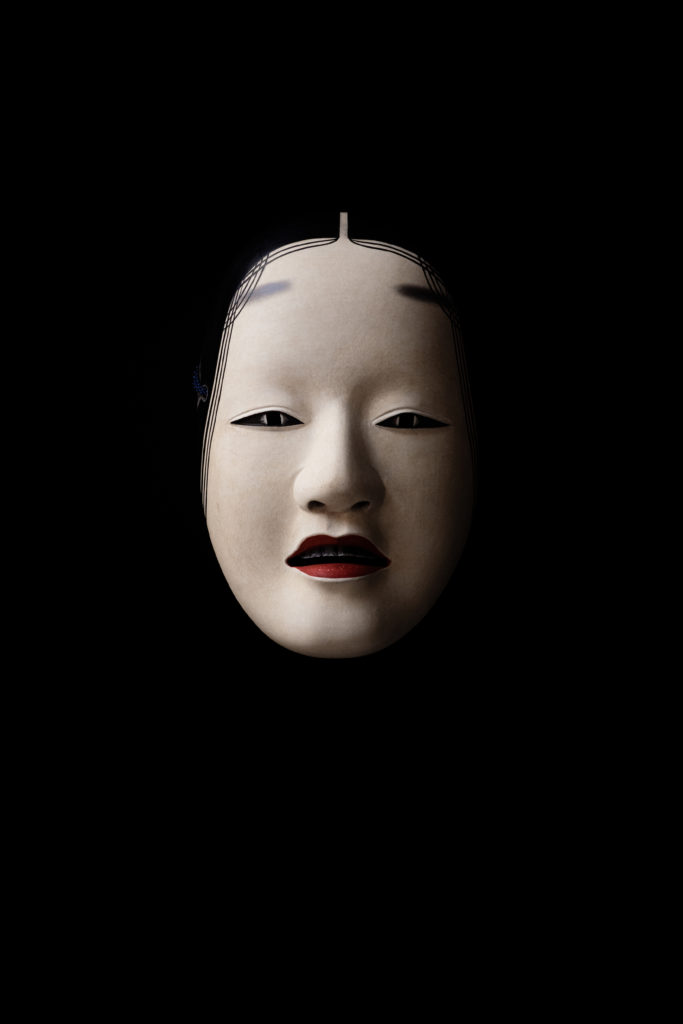
“Noh” is one of the plays. It has been designated as a World Intangible Heritage by Japan’s original performing art, which is said to be the oldest in the world as a theater that has been passed down. Not only in the play, but also in the vocal music “Utai” and the musical instrument performance “Hayashi”, the story moves in a dance-like manner. It is often contrasted with musicals and operas, but the difference is striking.
Another feature is that it is a mask play that uses a mask called “Noh-men” or “Omote”. A tool for transforming into an entirely different dimension, such as a Shinto buddha, a hermit, or a ghost, which is indispensable for Noh.


Noh-men, which looks seemingly expressionless, delicately expresses various expressions depending on the light, angle and performer.
能は演劇の一つである。継承されている演劇としては「世界最古」といわれる日本独自の舞台芸術で、世界無形遺産に指定されている。


芝居のみならず、「謡(うたい)」という声楽と「囃子(はやし)」という楽器演奏に乗せて、舞踏的な動きで物語を進めてゆく。
しばしばミュージカルやオペラと対比されるが、その違いには目を見張るものがある。

もう一つの特徴は、「能面」あるいは「面(おもて)」という仮面を使う仮面劇であるということだ。老人、あるいは神仏、仙人や亡霊といったまったく違う次元の役に変身するための道具で、能にとってはなくてはならないものである。


上に向けることを「照ラス」と言い、笑顔や喜びなどを表現する。
下に向けることを「曇ラス」と言い、悲しみや恥じらいなどを表現している。
一見無表情に見える能面は、光や角度、そして演者によって様々な表情を繊細に表現しているのである。
コメントを残す